Vogels, TU Delft
client
deliverables
Materialized Product
in short
In our current ‘attention economy’ and digital age of technology, information is at our fingertips constantly. However, this development comes with the cost of distraction. Since the introduction of technologies such as the smartphone our attention span has drastically dropped. Due to the constant interaction of the user with its devices and the extensive amount of information we process, our brains become overstimulated. In the final project of Bachelor I searched for a solution to the problem of digital distraction. The goal was to minimize distractions through the control of distractive triggers and by facilitating an experience of deep focus. Within this I mainly focused on how the smartphone distracts users as well as how the smartphone could become part of the solution.
Research
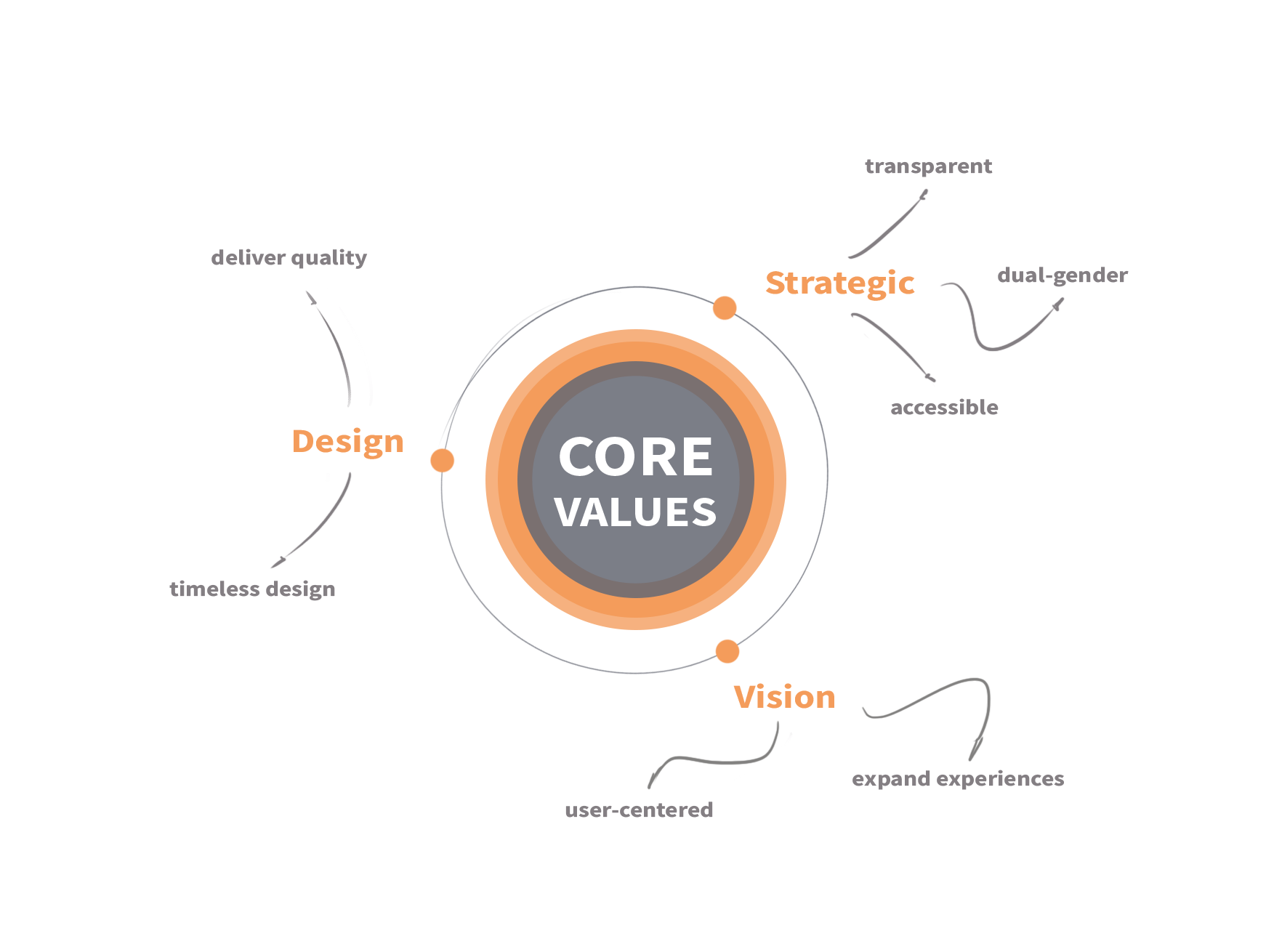
The client for this project was Vogels, which is mostly known for their refined TV wall mounts. Designing optimal user-experiences is at the core of this company as their products are mostly made to facilitate and enhance user-experiences of a secondary products like a TVs, speakers and tablets. Within designing their products they aim for quality, reliability and ease of use. In other words, Vogels is focused on delivering products that expand and refine user-experiences for the professional market as well as the consumer market.
In product design the user is always in the middle point of the product experience. In order to design the right user experience, I first needed to fully understand the target group. In this case Vogels chose to focus on millennials for this project. In order to uncover the details of their daily lives and gain insight in what drives millennials, I did research through in-depth interviews, questionnaires and literature. This research focused on understanding their behaviour, their environment and what products they use. The analysis of this research made clear that the target group felt distracted by the use of their digital devices. Consequently, I saw this problem as an opportunity to outline the focus of my design challenge.
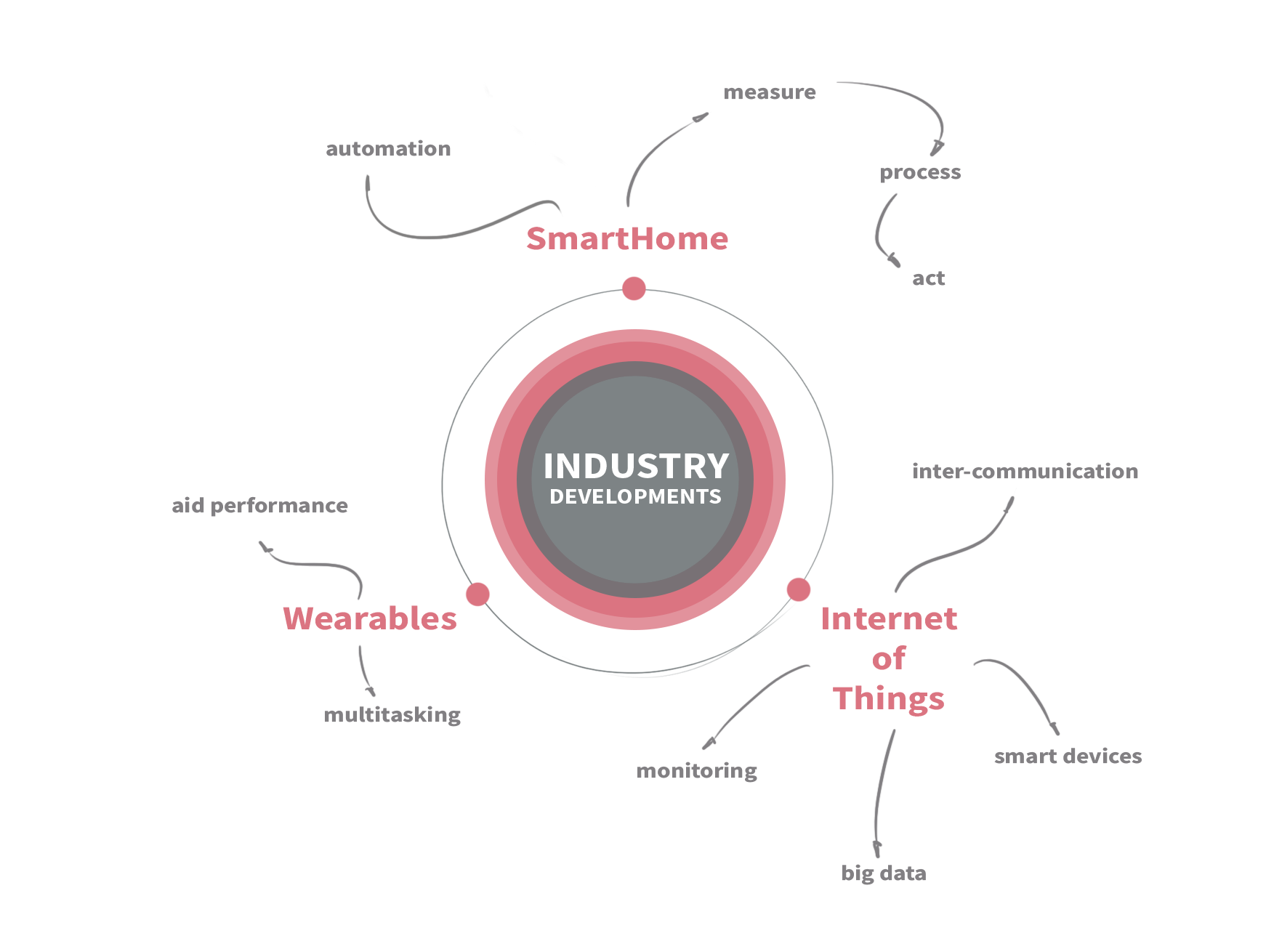
In order to propel innovation, I believe it is important to uncover and understand the newest technologies. During my research on the developments of the industry I found several interesting topics to take into account, namely: The internet of things, big data, domotics, casting, NFC, wearables, machine intelligence and the accessibility of information where we can now experience anything, anytime, anywhere on any device.

Analysis
The Problem
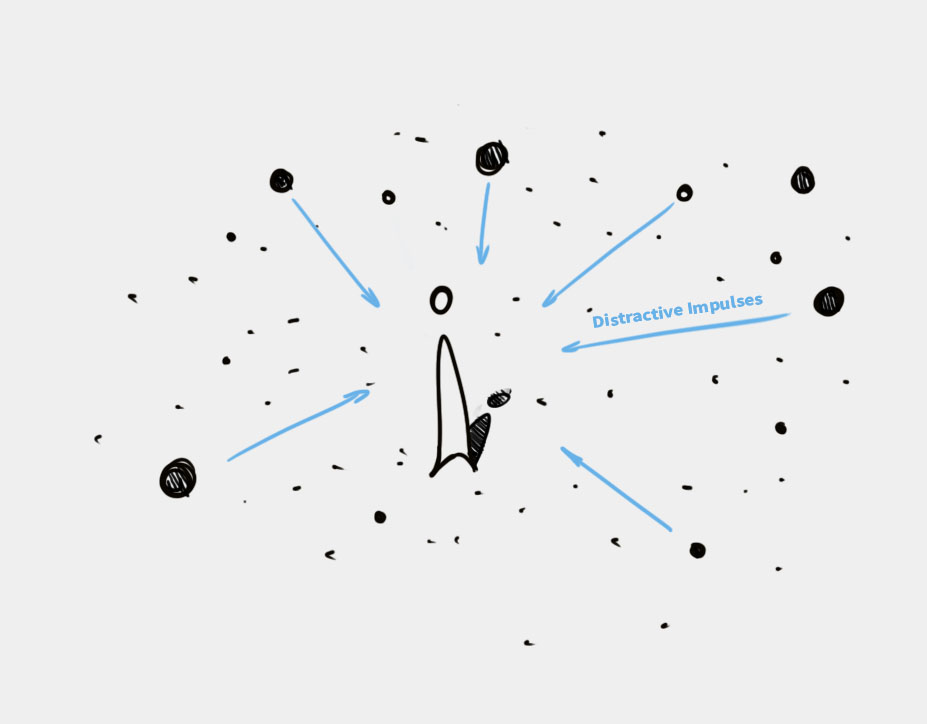
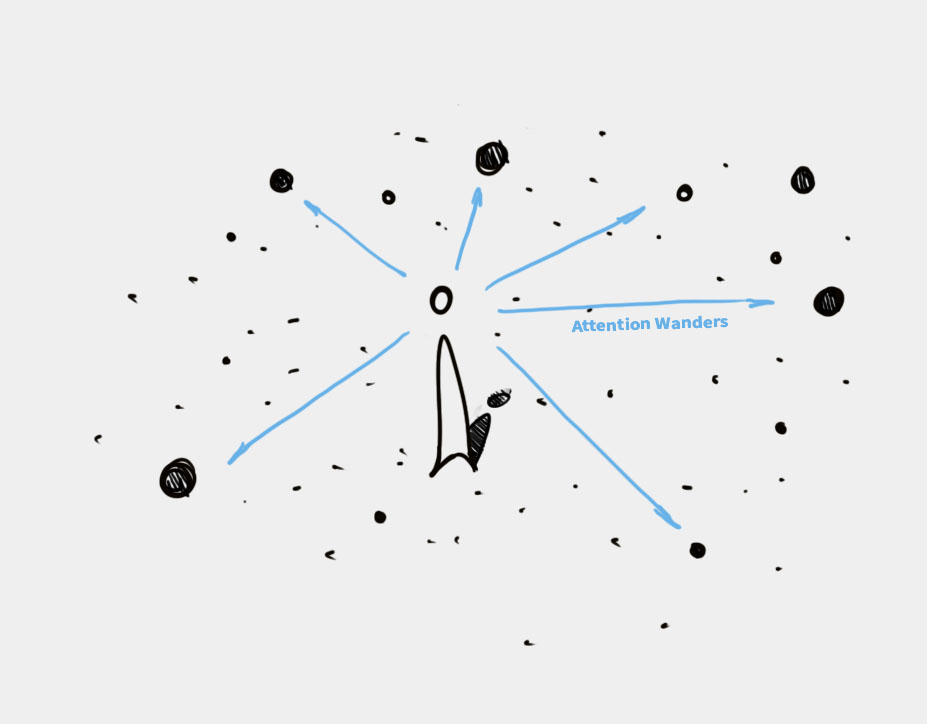
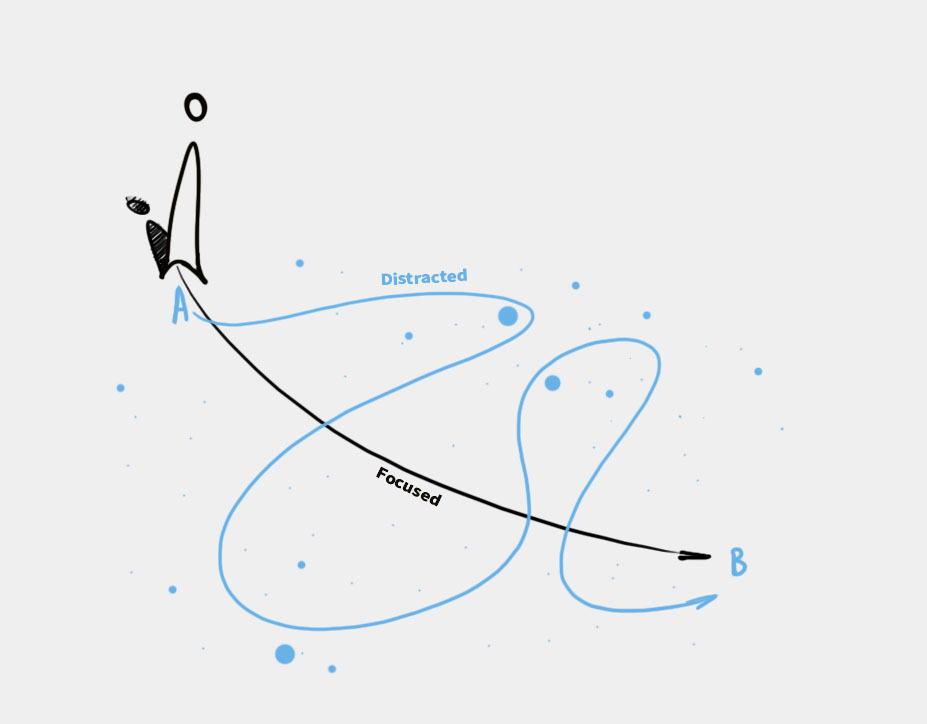
The problem of distraction and our ability to cope with it relies on a combination of factors: Busy city environments, disruptive technologies and the biology of the human brain. Through literature research I learned that the human brain is very sensitive to novelty in terms of processing information. Since mankind has developed a wide range of technologies and an urban environment that presents us constantly with new information and other impulses the problem of distraction is growing. Especially social media platforms and tv-shows facilitate a continuous stream of novelty. These impulses capture our attention and thus get distracted. With the development of the smartphone we gave ourselves the biggest source of distraction at our fingertips. Through the repetition of this behaviour our reward system in the brain is conditioned to stimulate this distractive behaviour and we become more reliant on it as a result.
Synthesis
The Psychology of Flow
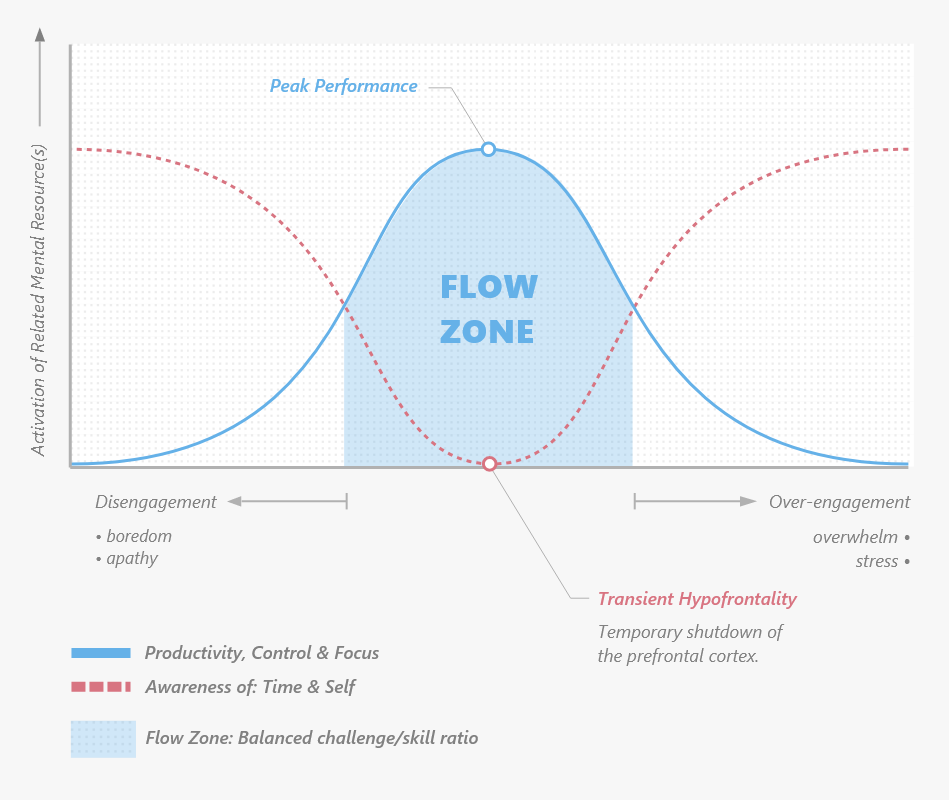
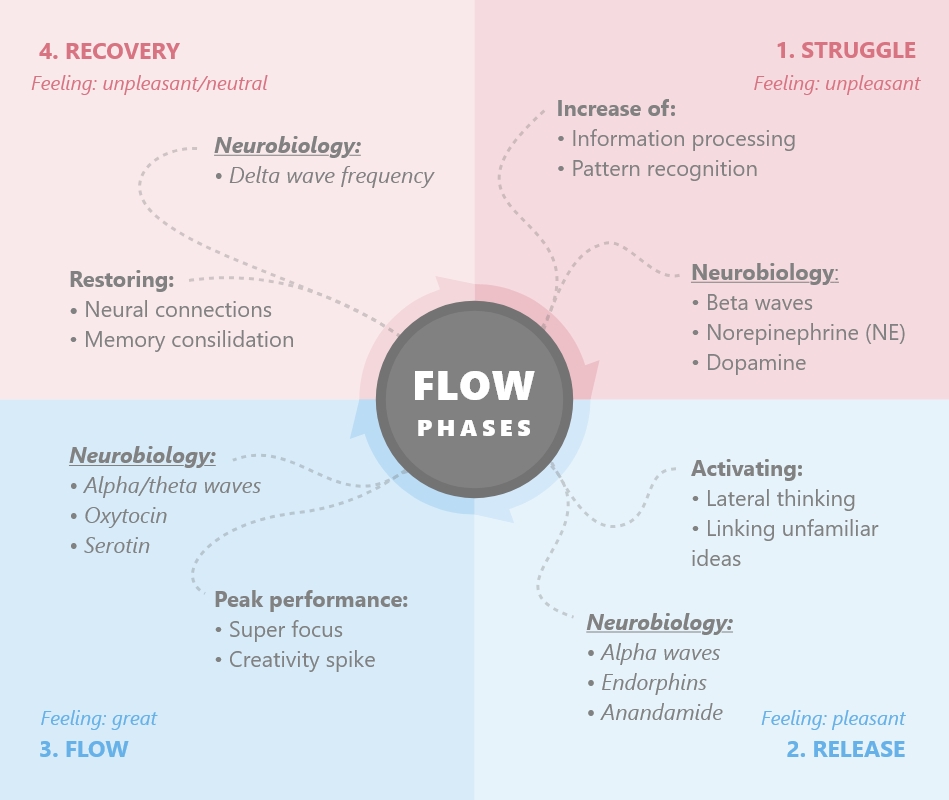
Whilst doing literature research I found an interesting subject called ‘Flow ’. In psychology flow is described as: The mental state of operation in which a person performing an activity is fully immersed in a feeling of energized focus, full involvement, and enjoyment in the process of the activity. The questions that came into my mind were: On what level do smart devices distract the users from their flow and how will this be affected by the growing smart device market? And, can a product help to facilitate an experience of flow?
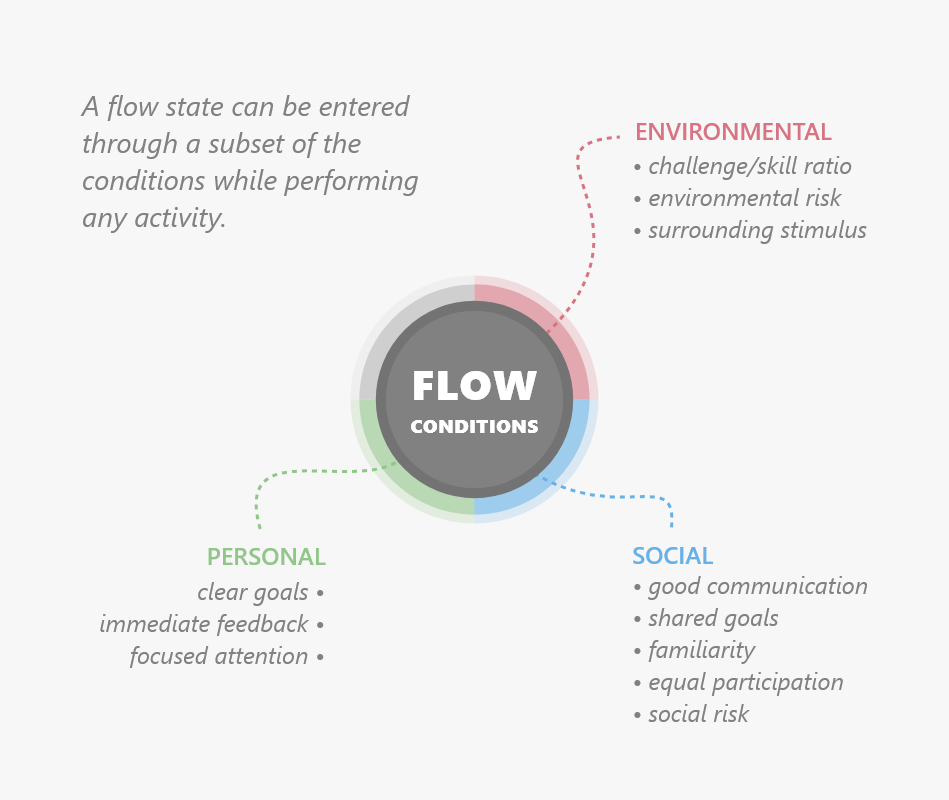
From my research on ‘Flow’, I concluded that the interplay between the internal and external environment shape the ability to experience this flow state. Our mood and mindset are on the one hand shaped by how we think and feel. On the other hand it is shaped by what is happening around us and if it is contributional or distractful. This determines our level of focus and eventually how events and information come at us while we move through our environment. For this project I focussed on finding a way to improve the home environment in order to improve the user experience of flow.
So, to solve the problem of distraction the idea is to facilitate control through a physical interaction with the help of a network of devices (IOT). On top of that the goal is to improve the situation of the user by helping them develop a healthy lifestyle to become less prone to the habit of distraction.
To achieve this the home environment is used as a foundation to facilitate:
- Control over our digital behaviour to minimize our distractions rate
- Structure in our day to day life to improve our performance through stimulating the experience of flow.
inspiration
An Experiment
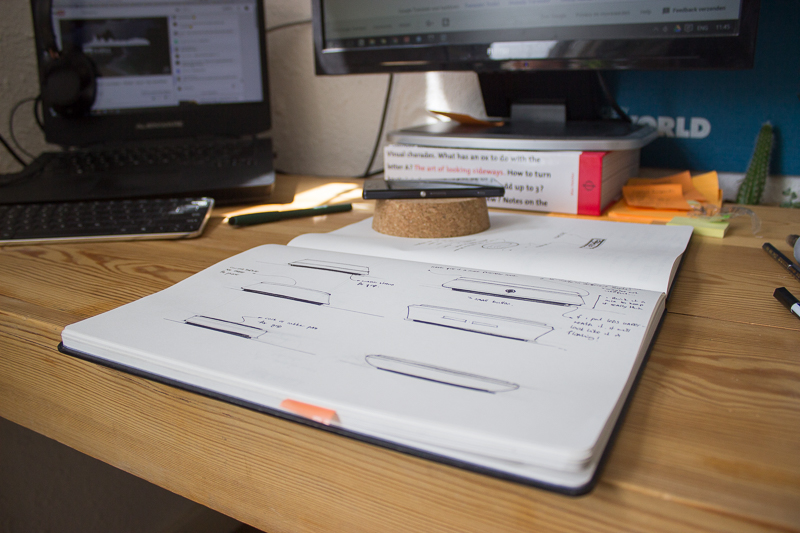
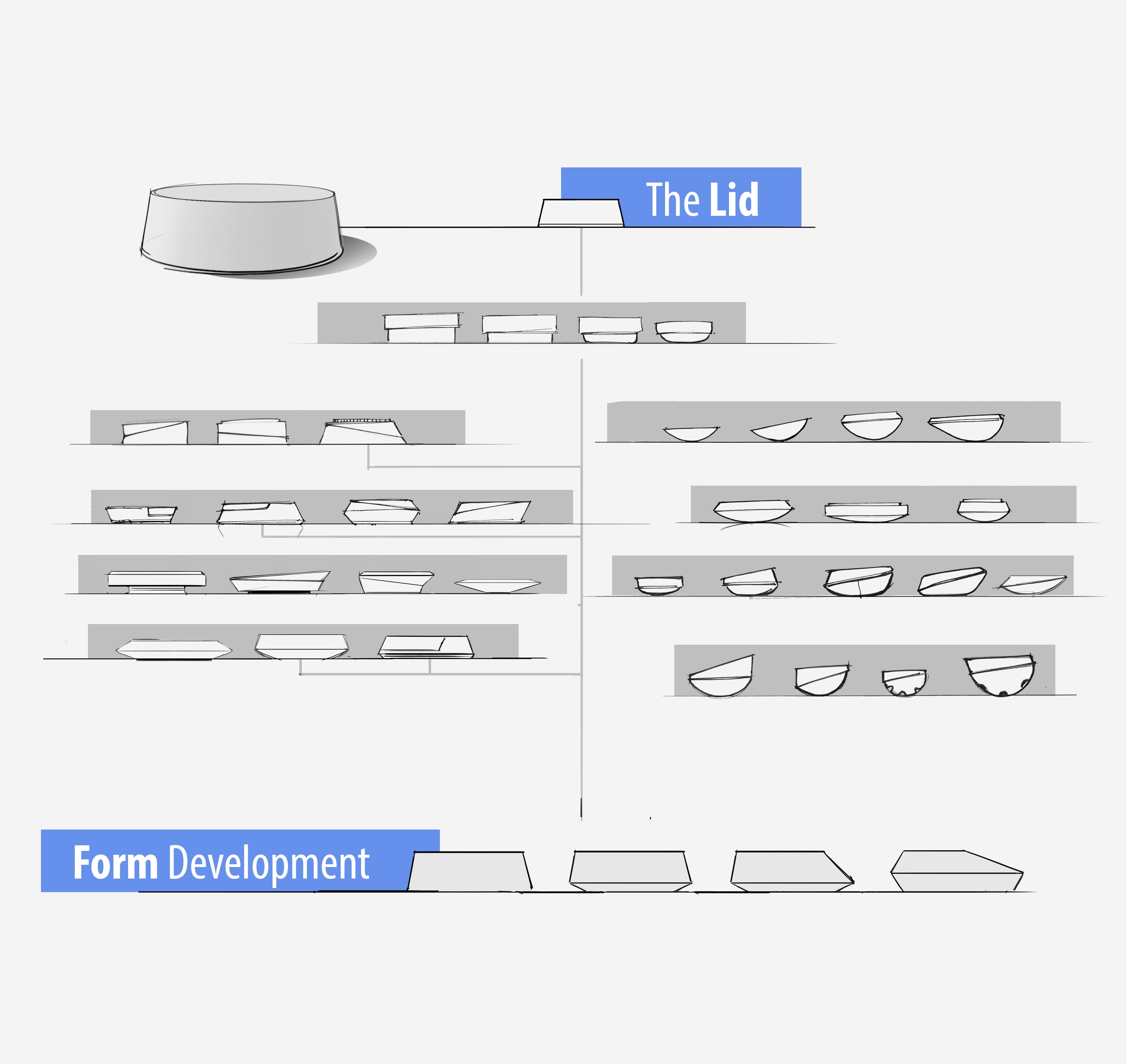
After incubating the research on distraction and the psychology of Flow I came with the idea of an experiment for myself. The experiment was about consciously placing my phone in specific places on specific times. I did so by using a cork lid as a set location to place it. Soon I noticed that by consciously placing my phone at a specific place, I forgot about it when I did not need it. In between activities I would check my phone for any important notifications but after that I would immediately place it back and continue with other activities. This repeated physical act of placing my phone on the lid started to change my behaviour and slowly became a habit as soon as I got home.
Ideation
Brainstorming & Sketching
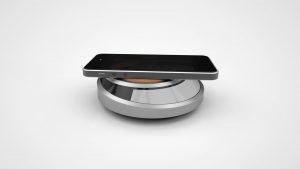
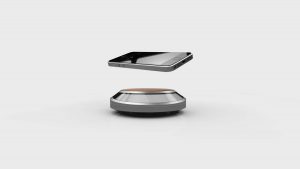
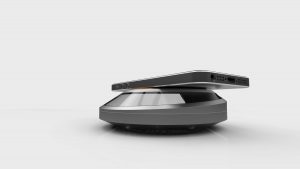
The experiment helped me in defining the design direction to a ‘Smartphone Hub’; an object to which you can attach your smartphone physically. The hub forms the physical transition between the analogue environment and the digital world. With this in mind I started sketching and brainstorming. Along this process I wondered about questions like: Where, why and how would the user want to connect? How could I force a subtle interaction that takes conscious effort and stays easy to use? How can the device blend with the home environment and still provide clear communication?

research 2.0
In Depth Scenario Research
For further development of initial ideas it was important to understand the details of my target group and their daily behaviour in the home environment. In order to find the most suitable moments to facilitate flow I had to understand the timeline of their routines and interactions with their devices. With the help of interviews and scenario-writing I carefully analyzed and gained insight in the most critical moments and activities of the day. With these results I created an overview of different user roadmaps and made the first list of requirements and features.

conceptualization
Different Solutions
The user roadmaps and themes helped me to come up with three interaction scenarios in which each focussed on a different theme. With the help of these scenarios I came up with three concepts.
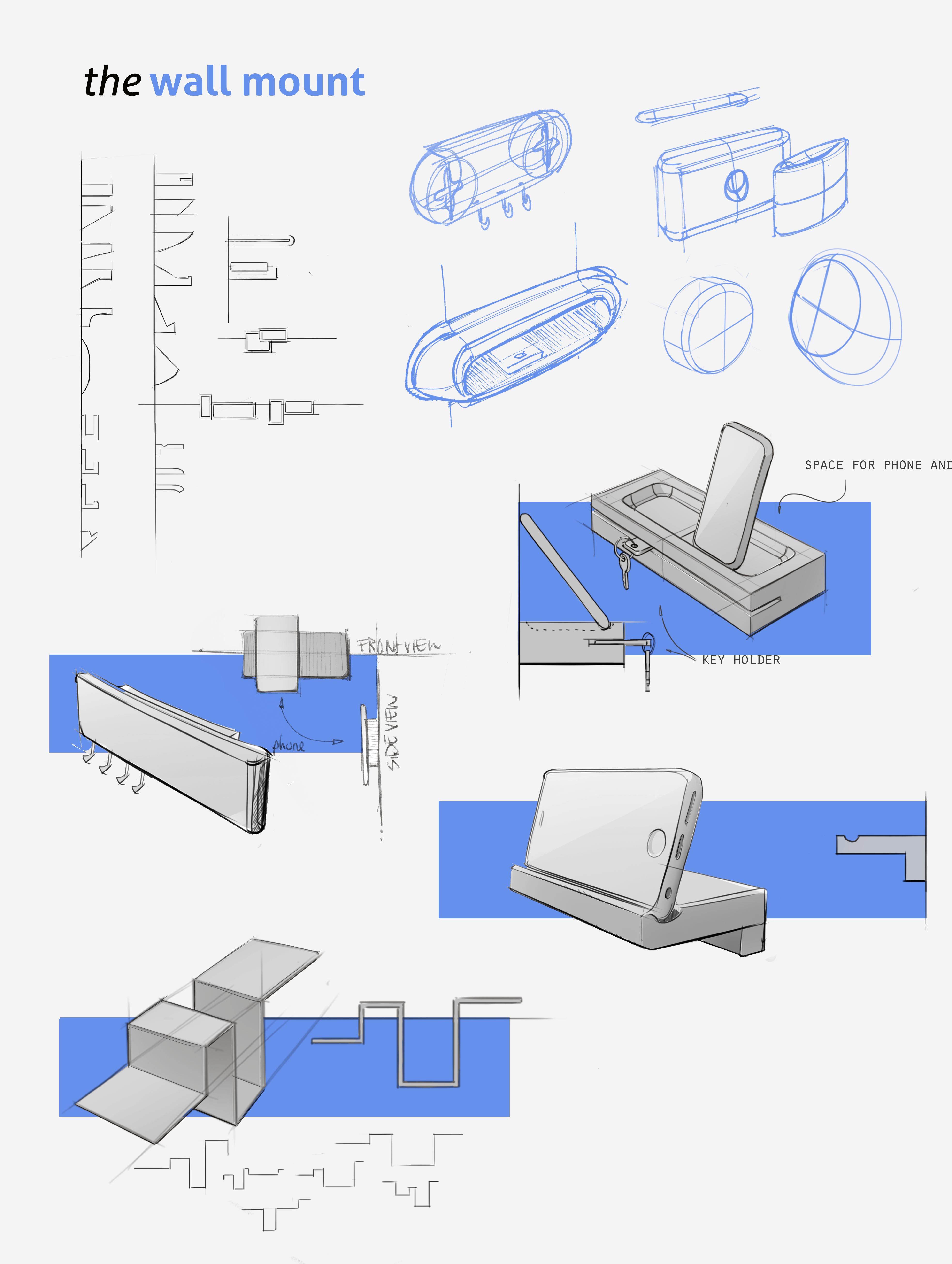
Serves as a quick access point in your house. I came up with this idea by visualizing the thought of coming home and directly putting your phone away like most do with their keys. The mount could then serve as sort of ‘logging into’ your home, connecting with your home grid. The idea was also focussed on the future were the product was meant for people with smartwatches. They could use these to be in control of their house, messages, calls, and so instead of carrying a smartphone around the house.
The single stand is one or more hubs that are connected to your house. Each hub creates a point of access to control different conditions like: light, audio and temperature. Next to that you have the ability to create a profile with personal preferences in the application of the product. In such way you become able to set triggers for different routines you want keep up with. It could also help you with planning your activities by synchronizing with your online calendar, the weather, traffic data, etc. Having multiple hubs across different rooms gives you the ability to create different actions when connecting, for example: turning on or dimming the light, turning on a certain playlist on spotify, turning on the kettle in your kitchen, etc.
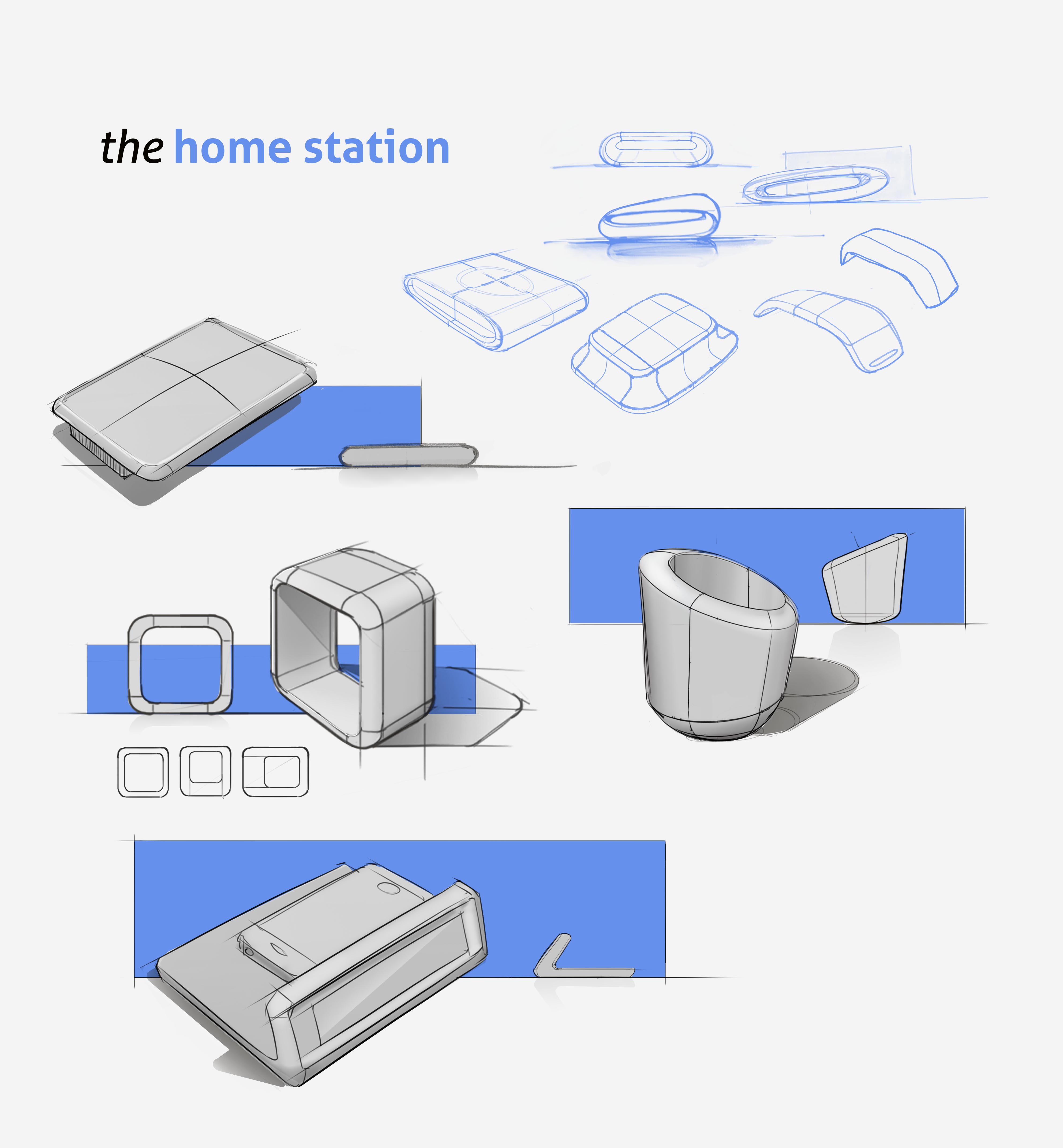
The homestation is a shared hub that fits multiple smartphones. It is aimed at family households and is mainly focused on having a place to easily drop your device. This hub is about disconnecting with your device for social reasons. Through disconnecting you focus on being together with the people around you without being distracted. Another advantage is that it keeps you organized, because you will always know where to find your smartphone.

conceptualization
The Final Choice
In order to make a choice I further defined a list of requirements, needs and wants. This clear overview enabled the comparison of the different concepts and highlighted the most potential concept. This process led to the choice of the third design direction from the single stand concept. Subsequently, I further developed the concept with the help of a mood board based on four themes: Modern, geometric, absent and minimal.
Materialization
Product Layout & Architecture
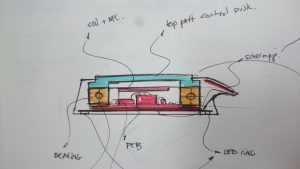
The challenge of this phase was to translate the desired functionalities into a feasible concept. For every feature and functional part of the product I had to figure out how to incorporate it. I tried to use as many standard components as possible to reduce costs but I also needed to design custom parts. In designing the custom parts I learned a lot about the considerations needed when using specific production methods. During this phase I also made prototypes to get a feeling of the actual shape and size.


Delivery
Final Presentation
The final design was made through creating a detailed 3D CAD model. I opted for this medium because this project was focused on delivering a feasible concept. By using a 3D model I was able to deliver the blueprints of the design as well as communicate a realistic impression of the product.